
rta guide to traffic generating developments
The RTA’s Guide, initially published in the mid-1990s, addresses traffic impacts from various developments.
It evolved from extensive trip generation and parking demand surveys, aiming to improve urban mobility and network efficiency.
This guide provides crucial insights for managing traffic volumes stemming from land uses like residential, commercial, and industrial projects.
1.1 Historical Context of the Guide
The Roads and Traffic Authority (RTA), now Transport for NSW, first released the Guide to Traffic Generating Developments in the mid-1990s. This initial publication arose from a recognized need to systematically assess and manage the traffic consequences of new developments across New South Wales. Prior to the Guide, traffic impact assessments were often inconsistent, lacking a standardized methodology and relying on limited data.
The development of the Guide was directly informed by a series of comprehensive trip generation and parking demand surveys. These surveys covered a broad spectrum of land uses, providing a robust empirical foundation for the assessment thresholds and methodologies outlined within the document; The Transport Planning Section in Blacktown, N.S.W., played a pivotal role in its creation, working on behalf of the Network Development Branch.
Early versions focused heavily on vehicle trips, but subsequent revisions have incorporated a broader perspective, acknowledging the importance of multimodal transport and person trips. The Guide has been updated over time to reflect evolving planning practices and transport technologies.
1.2 Purpose and Scope of the Guide
The primary purpose of the RTA’s Guide to Traffic Generating Developments is to provide a consistent and transparent framework for assessing the traffic impacts of new development proposals. It aims to ensure that the transport network can adequately accommodate the increased demand generated by these developments, minimizing congestion and maintaining network efficiency.
The scope of the Guide encompasses a wide range of land uses commonly recognized as significant traffic generators. This includes, but isn’t limited to, residential subdivisions, commercial centers, retail complexes, and industrial estates. It establishes thresholds, based on size and capacity, that determine when a full Traffic Impact Assessment (TIA) is required.
Furthermore, the Guide emphasizes a shift in focus from solely considering vehicle trips to evaluating person trips, promoting a more holistic view of transport system impacts. It supports informed decision-making during the development approval process, integrating with local planning regulations.
1.3 Target Audience: Developers and Planners
The RTA Guide is specifically designed for two key groups: property developers and local government planners. Developers will find the Guide invaluable in understanding the requirements for traffic impact assessments and ensuring their projects comply with RTA standards from the initial planning stages.
It provides clarity on thresholds for triggering a TIA, streamlining the development approval process and reducing potential delays. Planners, on the other hand, utilize the Guide as a key reference document when evaluating development applications.
It offers a standardized methodology for assessing traffic impacts, ensuring consistency across different development proposals and facilitating informed decision-making. Both groups benefit from the Guide’s focus on multimodal transport considerations, promoting sustainable transport solutions and a comprehensive understanding of network effects.
Defining Traffic Generating Developments (TGDs)
Traffic Generating Developments (TGDs) are land uses significantly impacting road networks and urban mobility. These include residential areas, shopping centers, industrial zones, and recreational facilities.
2.1 What Constitutes a TGD?
A Traffic Generating Development (TGD) is fundamentally defined as any land use or project anticipated to create a substantial volume of traffic. This impact isn’t limited to just vehicles; it encompasses pedestrian and cyclist activity as well. Determining whether a development qualifies as a TGD hinges on its potential to influence the surrounding transportation network’s capacity and performance.
The RTA Guide focuses on developments with the capacity to noticeably alter traffic patterns, potentially leading to congestion or safety concerns. This necessitates a thorough assessment of the proposed development’s size, nature, and location. Crucially, the guide emphasizes that even developments below specific thresholds can be considered TGDs if they exhibit unique characteristics or are situated in sensitive areas.
The assessment considers not only the absolute number of trips generated but also their timing, distribution, and mode of transport. A development generating a small number of trips during peak hours might have a greater impact than one generating a larger number during off-peak times. Therefore, a comprehensive understanding of trip characteristics is vital in accurately identifying TGDs.
2.2 Examples of Common TGDs
Numerous development types routinely qualify as Traffic Generating Developments (TGDs), demanding careful traffic impact assessments. Residential developments, particularly large-scale housing estates or apartment complexes, are prime examples, as they introduce significant daily commuter traffic. Similarly, commercial & retail developments – shopping centers, supermarkets, and large stores – attract substantial vehicle and pedestrian flow.
Industrial developments, including warehouses, manufacturing plants, and distribution centers, also fall under this category due to frequent truck movements and employee commutes. Recreational facilities, such as stadiums, theme parks, and large event venues, generate concentrated traffic during specific times. Even educational institutions, like universities and large schools, contribute to peak-hour congestion.
The RTA Guide acknowledges that the specific impact varies based on location and scale. A small corner store won’t have the same effect as a regional shopping mall. Therefore, assessing each development’s unique characteristics is crucial for determining its TGD status.
2.2.1 Residential Developments
Residential developments are consistently identified as significant Traffic Generating Developments (TGDs). The impact stems from the daily commuting patterns of residents, with peak periods occurring during school drop-off/pick-up and traditional work hours. Larger estates and high-density apartment complexes naturally generate more trips than smaller, low-density housing.
Trip generation rates for residential areas are often calculated based on dwelling units, considering factors like household size and car ownership. However, the RTA Guide emphasizes a shift towards assessing ‘person trips’ rather than solely vehicle trips, acknowledging walking, cycling, and public transport usage.
Traffic impacts aren’t limited to road networks; pedestrian and cyclist safety must also be considered, particularly near schools and local shops. Effective traffic management strategies for residential areas include promoting sustainable transport options and ensuring adequate street connectivity.
2.2.2 Commercial & Retail Developments
Commercial and retail developments, such as shopping centers and office parks, represent substantial TGDs due to their concentrated activity and diverse trip purposes. These developments attract customers, employees, and delivery vehicles, leading to complex traffic patterns throughout the day.
Trip generation is heavily influenced by factors like the size of the development, the types of businesses present, and its accessibility. Large shopping malls, for instance, generate significantly more traffic than small local shops. Consideration must be given to peak shopping hours, lunchtimes, and delivery schedules.
Effective assessment requires analyzing both vehicular and pedestrian movements, alongside potential impacts on surrounding road networks. The RTA Guide stresses evaluating the multimodal transport network, including public transport access and pedestrian/cycle facilities. Mitigating strategies include providing ample parking, promoting carpooling, and improving public transport links.

2.2.3 Industrial Developments
Industrial developments, encompassing manufacturing facilities, warehouses, and distribution centers, are significant Traffic Generating Developments (TGDs) with unique characteristics. Unlike retail, industrial traffic often involves a higher proportion of heavy vehicles, impacting road pavement and network capacity.
Trip generation is linked to factors like the size of the facility, the type of industry, and employment levels. Deliveries and dispatch operations contribute to peak traffic periods, often occurring outside traditional commute times. Assessing the impact of truck movements, including turning maneuvers and vehicle dimensions, is crucial.
Traffic Impact Assessments (TIAs) for industrial areas must consider access for large vehicles, loading dock locations, and potential queuing on surrounding roads. The RTA Guide emphasizes a comprehensive transport system analysis, including consideration of rail freight connections and opportunities to shift freight from road to rail. Mitigating measures include dedicated truck routes and improved intersection design.
Key Principles of Traffic Impact Assessment

Traffic Impact Assessments now prioritize person trips over vehicle trips, ensuring a broader view of transport network effects.
This shift considers multimodal options and comprehensive system analysis for effective planning.
3.1 Shift from Vehicle Trips to Person Trips
Historically, traffic impact assessments heavily focused on quantifying vehicle trips generated by developments. However, the RTA Guide recognizes the limitations of this approach. Solely concentrating on vehicles overlooks the diverse ways people travel and the broader impacts on the transport network.
The updated methodology emphasizes a shift towards assessing person trips – the actual number of individuals traveling, regardless of their mode of transport. This encompasses walking, cycling, public transport, and carpooling, providing a more holistic understanding of travel demand.
By focusing on person trips, planners can better evaluate the effectiveness of alternative transport options and identify strategies to reduce reliance on private vehicles. This approach supports sustainable transport planning, promotes accessibility, and minimizes congestion. It ensures that transport solutions cater to the needs of all users, not just those traveling by car, leading to a more efficient and equitable transport system.
3.2 Multimodal Transport Network Considerations
The RTA Guide stresses that assessing traffic impacts requires a comprehensive view of the entire transport network, not just road infrastructure. This means considering all modes of transport – walking, cycling, public transport, and private vehicles – and how they interact.
A truly effective traffic impact assessment analyzes how a development will affect pedestrian and cyclist safety and accessibility, as well as the capacity of public transport systems. It evaluates the potential for increased demand on these modes and identifies any necessary improvements.
Ignoring non-road transport options can lead to underestimation of congestion and missed opportunities to promote sustainable travel. The guide advocates for integrated transport planning that prioritizes connectivity and seamless transfers between different modes, ultimately creating a more resilient and efficient transport network for all users.
3.3 Importance of Comprehensive Transport System Analysis
The RTA Guide emphasizes that a robust Traffic Impact Assessment (TIA) must move beyond simply counting vehicle trips. It requires a holistic analysis of the entire transport system, acknowledging interconnectedness and potential ripple effects.
This comprehensive approach involves evaluating the impact on surrounding road networks, intersections, public transport routes, pedestrian and cyclist facilities, and even parking availability. It necessitates forecasting future traffic patterns, considering planned developments and population growth.
A thorough analysis identifies potential bottlenecks, assesses the need for infrastructure upgrades, and proposes mitigation strategies to minimize negative impacts. Ignoring this broader perspective can result in inadequate solutions and exacerbate existing transport challenges. The guide champions a proactive, system-wide approach to ensure sustainable and efficient transport outcomes.
Schedule 3: Thresholds for Traffic Impact Assessment
Schedule 3 defines size and capacity limits triggering a TIA. It specifies requirements for developments with direct road or pedestrian access, based on Column 2 criteria.
Compliance with these thresholds is vital for development certification and navigating Section 128 regulations.
4.1 Understanding Column 2: Size and Capacity Limits
Column 2 of Schedule 3 within the RTA Guide is fundamental for determining when a Traffic Impact Assessment (TIA) is required. This column meticulously outlines specific size and capacity thresholds for various development types. These limits act as triggers; exceeding them necessitates a comprehensive evaluation of potential traffic consequences.
For instance, the guide details thresholds relating to the number of dwelling units in residential developments, the gross floor area of commercial spaces, or the scale of industrial facilities. The precise values within Column 2 are carefully calibrated based on observed trip generation rates from similar developments;
Developers must meticulously assess their project against these benchmarks. If a proposed development surpasses the stipulated limits in Column 2, a detailed TIA becomes mandatory to demonstrate how potential traffic impacts will be mitigated. This ensures that the existing road network can accommodate the increased demand without significant degradation of service levels.
Understanding these thresholds is not merely about compliance; it’s about responsible planning and contributing to a sustainable transport system.
4.2 Direct Vehicular and Pedestrian Access Requirements
The RTA Guide emphasizes that the thresholds outlined in Column 2 of Schedule 3 primarily apply to developments with direct vehicular or pedestrian access to any public road. This direct connection is a key determinant in triggering the requirement for a Traffic Impact Assessment (TIA).
Essentially, if a development doesn’t have a physical access point directly onto a road – for example, if it’s entirely reliant on access via another property or a private road without public right-of-way – the Column 2 thresholds may not automatically apply. However, this doesn’t necessarily exempt the development from traffic considerations.
The guide clarifies that exceptions may exist, and a case-by-case assessment is often necessary. Even without direct access, significant traffic generation could still warrant an investigation. Careful consideration must be given to the cumulative impact on the surrounding road network, regardless of access arrangements.
Properly defining ‘direct access’ is crucial for accurate TIA determination and responsible development planning.
4.3 Complying Development Certification & Section 128
The RTA Guide intersects with the concept of ‘Complying Development’ certification, streamlining approvals for projects meeting pre-defined criteria. Section 128 specifically relates to traffic-generating developments within this framework.
If a development falls within the parameters of a Complying Development, and meets all relevant requirements – including those outlined in Schedule 3 regarding traffic generation thresholds – it can proceed with certification without requiring a full, detailed Traffic Impact Assessment (TIA). This accelerates the approval process.
However, it’s vital to note that ‘complying’ doesn’t equate to ‘no traffic considerations.’ Developers must still demonstrate adherence to relevant traffic management principles and potentially implement mitigation measures, even within the Complying Development pathway.
Section 128 ensures that even streamlined approvals account for potential traffic impacts, maintaining a balance between efficiency and responsible urban planning. Thorough understanding of both the RTA Guide and Complying Development regulations is essential.

Recent RTA Development Projects & Traffic Management
RTA projects like Al Qudra and Al Fay Street demonstrate commitment to optimizing traffic flow and enhancing mobility for residents through strategic infrastructure development.
These initiatives reflect the principles outlined in the Guide, prioritizing efficient transport networks.
5.1 Al Qudra Street Development Project
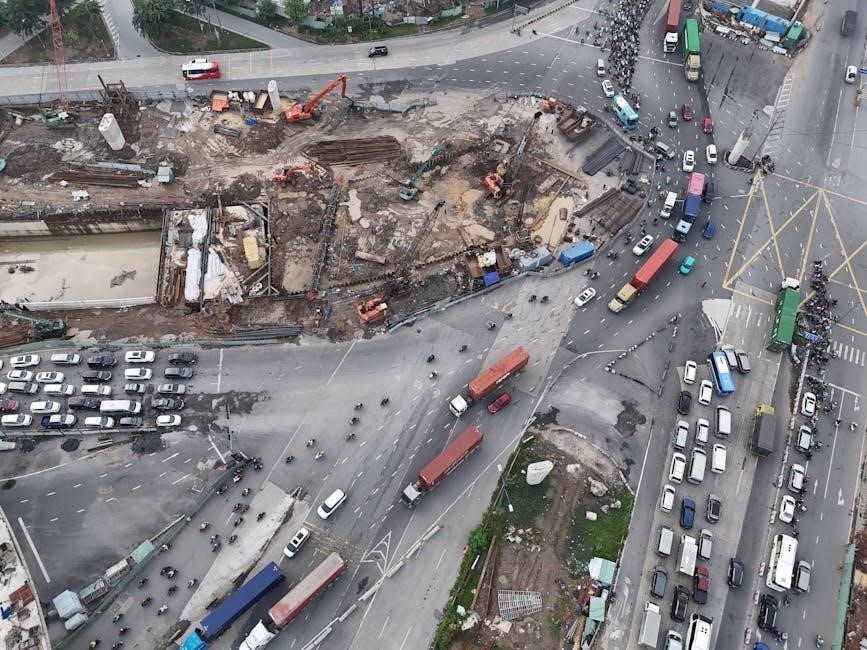
The Al Qudra Street Development Project, awarded by the RTA, represents a significant investment in improving transportation infrastructure within Dubai. This project is strategically designed to optimize traffic flow along Al Qudra Street, a vital artery connecting various key areas of the emirate.
A core objective of the development is to enhance mobility for residents and visitors alike, addressing the increasing traffic demands generated by surrounding residential and commercial developments – precisely the types of Traffic Generating Developments (TGDs) the RTA Guide addresses. The project’s scope includes road widening, junction improvements, and the implementation of advanced traffic management systems.
These enhancements directly align with the principles outlined in the RTA Guide, which emphasizes a comprehensive approach to transport system analysis. By improving capacity and efficiency on Al Qudra Street, the project aims to mitigate potential congestion caused by increased vehicle trips, ultimately contributing to a more sustainable and efficient transportation network. The project exemplifies the RTA’s proactive approach to managing traffic impacts and supporting continued urban growth.
5.2 Al Fay Street Development Project
The Al Fay Street Development Project, another key initiative undertaken by the RTA, focuses on enhancing connectivity and traffic flow in a densely populated urban corridor. This project extends along Al Fay Street, commencing from its intersection with Sheikh Mohammed bin Zayed Road and continuing through a vital commercial and residential area.
Similar to the Al Qudra Street project, this development directly responds to the challenges posed by Traffic Generating Developments (TGDs) along the corridor. The RTA’s investment aims to alleviate congestion and improve accessibility for commuters and residents, reflecting the principles detailed within the RTA Guide to Traffic Generating Developments.
Improvements include road widening, signal optimization, and the integration of intelligent transport systems. These measures are designed to accommodate increased traffic volumes and promote smoother traffic movement. The project demonstrates the RTA’s commitment to proactive traffic management and its dedication to creating a more efficient and sustainable transport network, aligning with the guide’s focus on multimodal considerations.

Utilizing the Guide in the Development Approval Process
The RTA Guide is integrated into local planning regulations, with Traffic Impact Assessments (TIAs) playing a key role in development approvals.
Section 128 relates to traffic-generating developments and complying certifications.
6.1 Integration with Local Planning Regulations
The RTA Guide to Traffic Generating Developments isn’t a standalone document; its principles are designed for seamless integration with existing local planning regulations across New South Wales. This integration ensures a consistent approach to managing traffic impacts resulting from new developments. Local councils utilize the Guide’s thresholds and methodologies when assessing Development Applications (DAs).
Specifically, the Guide informs the conditions placed on development approvals, dictating requirements for traffic mitigation measures. These can range from upgrades to intersections and pedestrian facilities to contributions towards public transport infrastructure. The Guide’s framework helps councils ensure that new developments don’t unduly burden the existing road network or compromise the safety and efficiency of transport systems.
Furthermore, the Guide supports the broader objectives of local planning strategies, such as promoting sustainable transport options and reducing reliance on private vehicles. By aligning development with transport capacity, the RTA Guide contributes to creating more livable and accessible communities.
6.2 The Role of Traffic Impact Assessments in Approvals
Traffic Impact Assessments (TIAs) are central to the development approval process, guided by the RTA Guide to Traffic Generating Developments. A TIA determines if a proposed development exceeds the thresholds outlined in Schedule 3, triggering the need for a comprehensive assessment of its traffic consequences.
These assessments analyze existing traffic conditions, forecast future traffic volumes with and without the development, and identify potential bottlenecks or safety concerns. Crucially, the Guide emphasizes a shift from solely focusing on vehicle trips to considering person trips and multimodal transport impacts.
The findings of a TIA directly influence the conditions attached to development approvals. Developers may be required to implement traffic calming measures, contribute to infrastructure upgrades, or provide alternative transport options. A well-conducted TIA, aligned with the RTA Guide, is therefore vital for securing approval and ensuring sustainable development.